
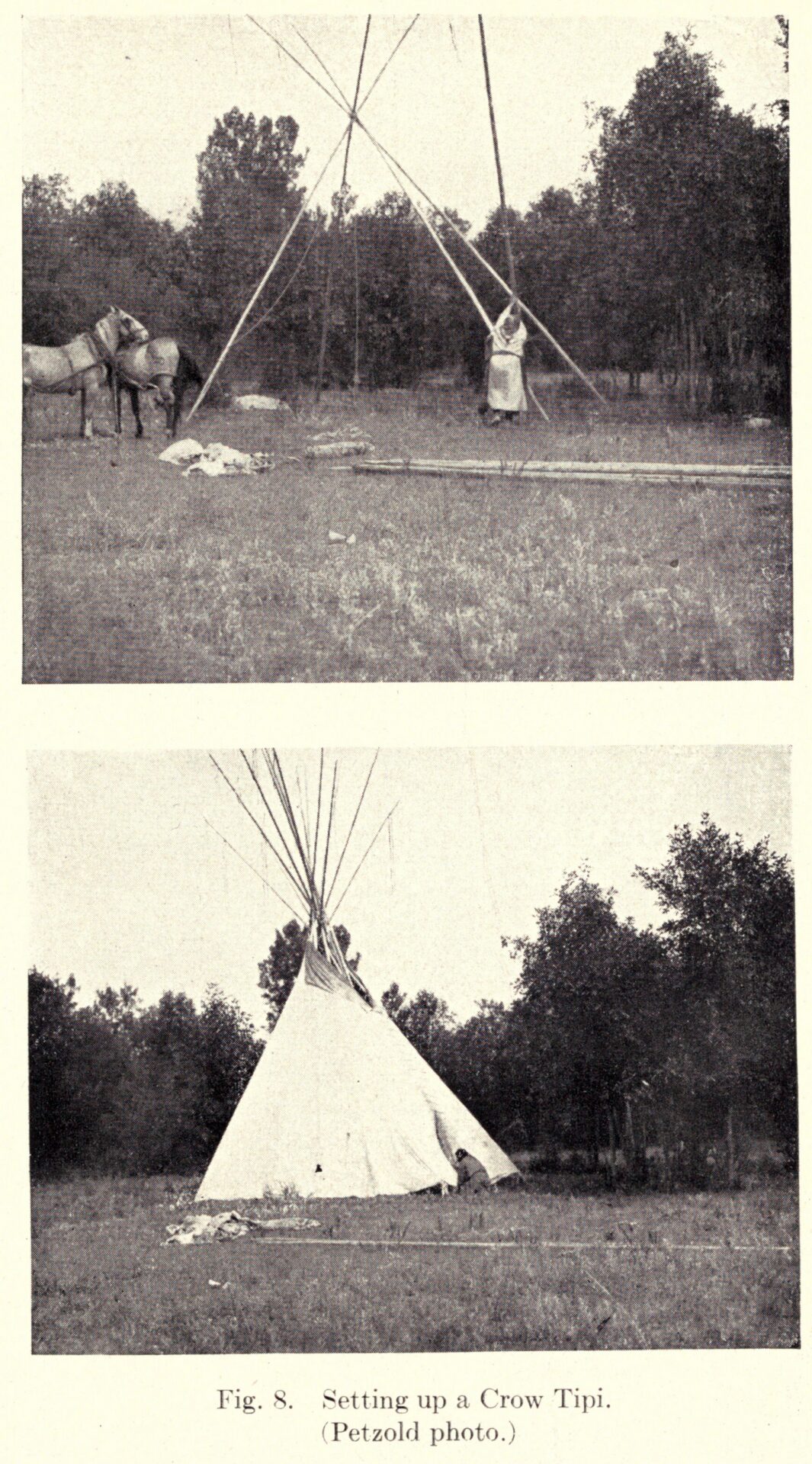
The tipi at Hidden Pond Lodge is a true 18-foot Plains-style lodge, built on a design that served the Lakota, Cheyenne, Crow, Kiowa, Blackfoot, and many other Plains nations for generations.
On the Plains the tipi belonged to the women. In 1920, Clark Wissler of the American Museum of Natural History wrote: “Everywhere the tipi was made, cared for, and set up by the women.” Women tanned the hides, sewed the cover, raised the poles, and pinned the lodge closed. When it was time to move camp, Wissler noted, “it took but a few minutes for the women to have everything loaded on travois and ready for the march.”
A tipi is a clever piece of design. The door traditionally faced east, toward the morning sun. Two smoke flaps at the top could be turned with the wind so the fire inside drew cleanly. The design worked so well that the U.S. Army modeled its Sibley tent on it.
A note for our guests: Hidden Pond sits on the Choctaw Nation’s reservation, and the Choctaw did not live in tipis. Their homeland towns in Mississippi were permanent settlements of wood-and-earth houses surrounded by fields. Our tipi honors Plains traditions, and we’ll share Choctaw history in its own posts.
Sources: Wissler, North American Indians of the Plains (1920), pp. 36–37; Hodge, ed., Handbook of American Indians North of Mexico, vol. 2, “Tipi,” pp. 758–759.